Brassaï: Secret Paris

In 1933, bewitched by the city of Paris, the photographer Brassaï published Paris by Night, a groundbreaking photobook depicting the shadowed streets, cafés, lovers, and nocturnal wanderers that came to define the modern image of the city.
A new exhibition at Howard Greenberg Gallery presents nearly 40 photographs from Brassaï’s celebrated Paris by Night series alongside selections from The Secret Paris, a group of images originally withheld from publication due to their provocative subject matter. Brassaï’s Secret Paris will be on view from February 7 through March 28, 2026. The exhibition is jointly presented by Howard Greenberg Gallery and Grob Gallery, Geneva.
Infused with mystery, intimacy, and cinematic atmosphere, Brassaï’s photographs transformed Paris after dark into a stage where beauty, danger, and desire coexisted. Considered too risqué for inclusion in the 1933 book, the Secret Paris photographs—depicting the city’s underworld of brothels, bars, and illicit encounters—were not published until 1976, decades after their creation. Together, the two series reveal Brassaï’s unmatched ability to navigate the city’s dual identities: the poetic and the forbidden, the public and the private. His Paris is at once romantic and raw, illuminated by streetlamps, reflected by mirrors, enveloped in fog and human vulnerability.
The show coincides with a new edition of Brassaï’s 1933 book Paris by Night published by Flammarion in on January 27, 2026, and an exhibition of his photography at the Moderna Museet, Stockholm, opening in March.
One most influential and poetic photographers of the 20th century, Brassaï arrived in Paris in 1924 and worked as a journalist by day. At night he roamed the streets, photographing in bars, bistros, and brothels. His friend, the writer Henry Miller, who accompanied him on his nocturnal walks in the City of Lights, called him “the eye of Paris.” Inspired by the work of fellow Hungarian André Kertész, Brassaï became legendary for his exotic views of the city and its residents, elevating night photography into a new visual language that continues to influence generations of photographers.
About the Artist
Brassaï (1899-1984) was born Gyula Halász in Brassó, Transylvania (then part of Hungary, later Romania). He was trained as an artist and after emigrating to Paris, worked as a journalist. Initially taking photographs to accompany his articles, he became enchanted with the medium. He changed his name to Brassaï, which means "from Brassó (the Transylvanian city now in Romania)," and within a few years, became one of France's most famous photographers—a unique chronicler of Paris in the 1920s and 30s. Aside from an interlude during World War II, Brassaï worked as a freelance photographer and writer for publications including Minotaure, Verve, Coronet, Picture Post, and Harper's Bazaar. Through the late 1960s, he continued working with Harper's Bazaar, traveling extensively on assignment. Many of his photographs made in England, Spain, the United States, and Brazil were printed in various publications during his lifetime.
Brassaï, who influenced generations of photographers to come, was awarded the first Grand Prix National de la Photographie in Paris (1978), the Chevalier des Arts et des Lettres (1974), and the Chevlier de l'Ordre de la Legion d' Honneur (1976). At the time of his death in 1984, Brassaï had published 17 books and hundreds of articles, and had exhibited his photographs, sculpture, and drawings. His film Tant qu'il aura des betes (1955) won the prize for Most Original Film at the Cannes Film Festival in 1956.
About Grob Gallery
Founded in London in 1981 by David Grob, Grob Gallery is a family-run business specializing in Modern and Contemporary Art, with particular emphasis on sculpture and vintage photography. Over more than four decades, the gallery has assembled a significant body of works that reflects key artistic developments of the 20th and 21st centuries. This collection functions not as a static holding but as an active resource, regularly showcased through exhibitions. Operating today through a flexible, international network, Grob Gallery maintains close working relationships with museums, institutions, and private collections worldwide. This nomadic model supports the careful circulation and contextualization of artworks across different cultural settings, allowing historical material to remain in active dialogue with contemporary perspectives.
-
 Brassaï, The Rue Quincampoix and its hôtels de passe, c.1932
 -
Brassaï, A prostitute playing Russian billiards, Boulevard Rochechouart, Montmartre, c.1932
-
Brassaï, Streetwalker near the Place d'Italie, Quartier Italie, c.1932
-
Brassaï, A girl on the Rue Quincampoix, in carpetslippers, naked under her coat, c.1931


-
Brassaï, Streetwalker with Client, Paris, c.1932
-
Brassaï, Pair of lovers, Rue Croulebarbe, near Place dItalie, c.1938
-
Brassaï, A girl in Les Halles, Rue de la Reynie, near the Boulevard Sébastopol, c.1931
-
Brassaï, Miss Diamonds, Bar de la Lune, Montmartre, c.1932


-
Brassaï, A couple at Le Monocle, c.1932
-
Brassaï, Young female invert, Le Monocle, c.1932
-
Brassaï, Couple at the Bal Nègre, Rue Blomet, c.1932
-
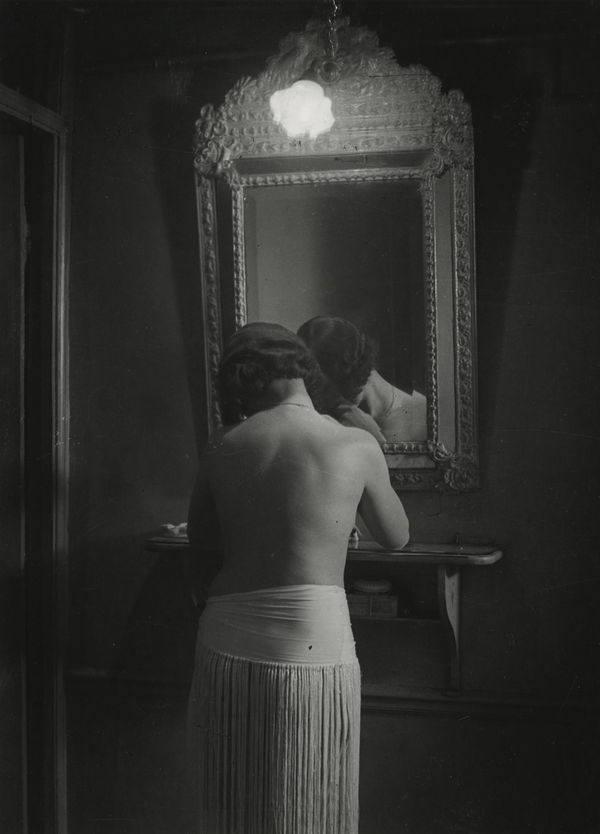
Brassai, Chez Suzy, c.1932


-
Brassaï, The Ball of Montagne Sainte-Genevieve, c.1932
-
Brassaï, Le Monocle, the bar. On the left is Lulu de Montparnasse, c.1932
-
Brassaï, Lovers' quarrel, Bal des Quatre Saisons, Rue de Lappe, c.1932
-
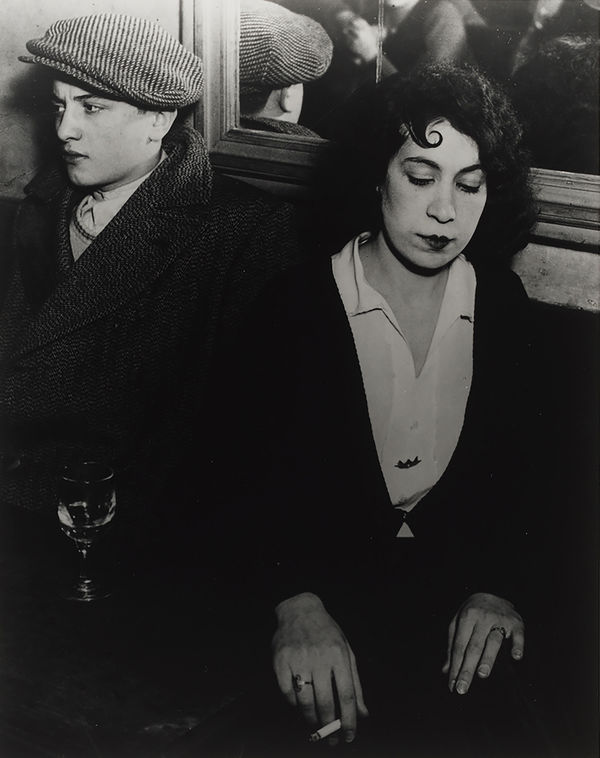
Brassaï, A happy group at the Quartre SaisonsGroupe joyeux au bal musette de Quatre-Saisons, c.1932



-
Brassaï, At Suzy, c.1932
-
Brassaï, Mirrored wardrobe in a brothel, Rue Quincampoix, c.1932
-
Brassaï, At Suzy, introductions, c.1932
-
Brassaï, Smokers preparing their pipes, c.1931


-
Brassaï, Kiki with her friends Thérèse Treize de Caro and Lily, 1932
-
Brassaï, Washing up in a brothel, Rue Quincampoix, c.1932
-
Brassaï, The Sun King, City Gate at Saint-Ouen, Paris, 1945-50
-
Brassaï, The square in front of Notre-Dame, 1932


-
Brassaï, Paris, c.1933
-
Brassaï, Evening at Longchamp Racetrack, Paris, 1936
-
Brassaï, Street fair on the Place d'Italie, c.1931
-
Brassaï, Homeless person sleeping in Marseille, 1937


-
Brassaï, Members of Big Albert's Gang, Place d'Italie, c.1932
-
Brassaï, Untitled, c.1932
-
Brassaï, The band at the Bal de la Montagne Sainte-Geneviève, c.1932
-
Brassaï, An English girl in her dressing room at the Folies Bergere, c.1932


-
Brassaï, The Human Gorilla's wife in her ”Loïe Fuller” dance, Place d'Italie, c.1933
-
Brassaï, "The Rainbow" at the Folies-Bergère, c.1932
-
Brassaï, The fire brigade, Folies-Bergère, c.1932
-
Brassaï, Homosexual Ball at Magic City, Rue Cognacq-Jay, c.1932


